
The Tomahawk Institute’s law enforcement programs are designed using our team’s shared experience, then thoughtfully constructed to be relevant, realistic, and relatable. The content is grounded in the understanding and replication of proven and effective tactics and techniques to keep you and those you serve safe.
Law Enforcement Course Catalog
Exterior Approaches
- Law Enforcement
10 Minutes
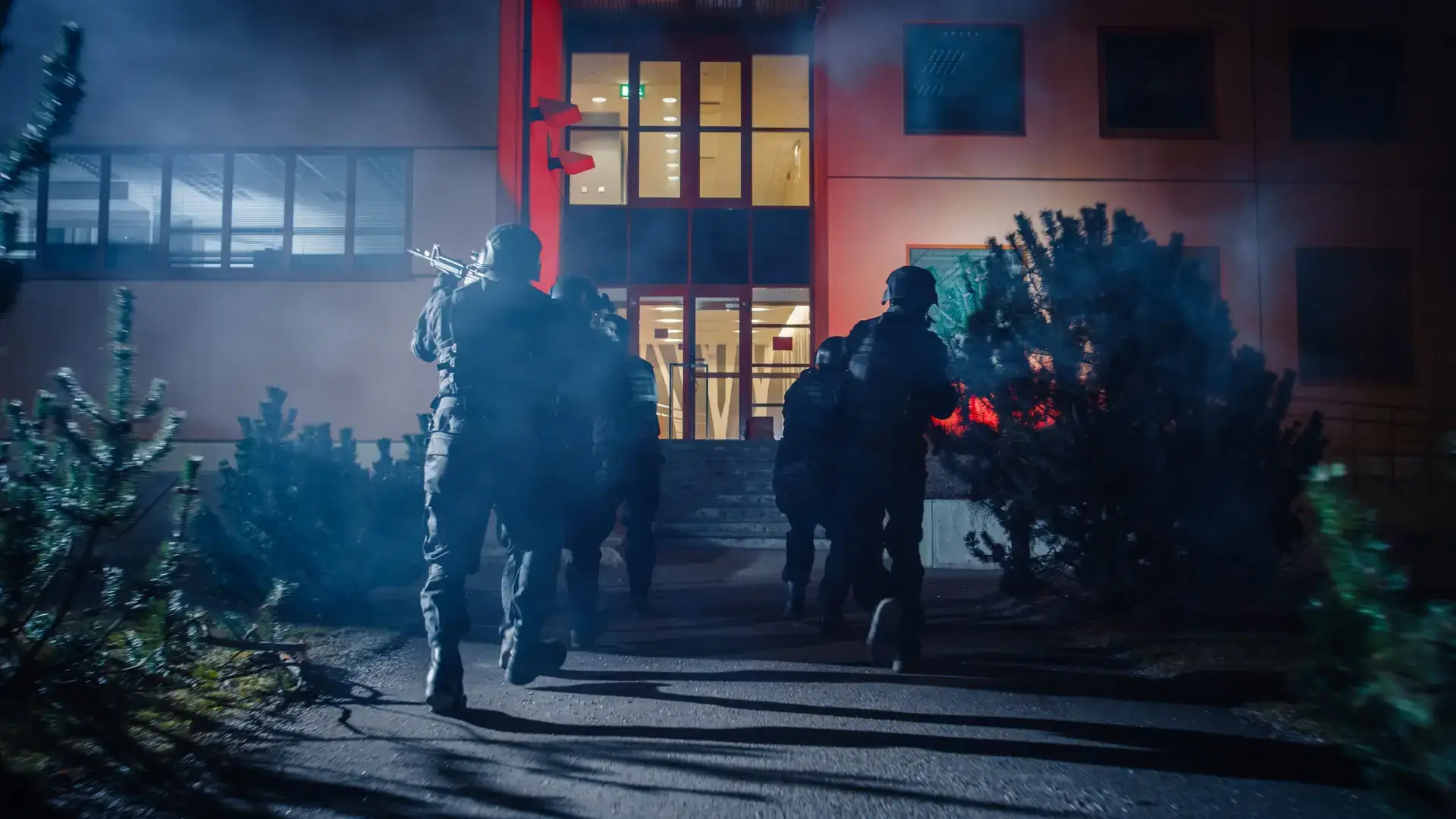
WHAT YOU WILL LEARN
- Introduction: Planning for Exterior Approaches
- Establishing the Outer Perimeter
- Establishing the Inner Perimeter
- Dismount and Movement to Target
- Approaching the Breach Point
- Bounding Overwatch Techniques
- Contingency Planning
- Summary
OBJECTIVES
1. Planning and Preparation
- Understand essential planning principles, including risk mitigation, fallback and rally points.
- Learn strategies for personnel and resource accountability.
- Develop evacuation and catastrophic event response plans.
2. Establishing the Outer Perimeter
- Ensure safety during exterior operations by restricting access.
- Coordinate civilian evacuation procedures.
- Maintain effective communication throughout perimeter security.
3. Establishing the Inner Perimeter
- Implement overlapping fields of fire for tactical advantage.
- Conduct observation and overwatch activities to monitor surroundings.
4. Dismount & Movement to Target
- Manage vehicle and personnel spacing for tactical movement.
- Execute coordinated dismount procedures.
5. Approaching the Breach Point
- Position team members with proper considerations and actions for breaching operations.
- Use recommended tactics to approach the target entry point safely and effectively.
6. Bounding Overwatch
- Perform team and solo movement techniques for secure advances.
- Apply bounding overwatch tactics to cover personnel during movement.
7. Contingency Planning
- Prepare for various scenarios, including casualty collection points (CCPs), evacuation, and security contingencies.
- Develop flexible plans to adapt to changing operational circumstances.
Hallway Management
- Law Enforcement
60 Minutes

WHAT YOU WILL LEARN
- Roles & Responsibilities
- Single Point Movement
- Dual Point Movement
- Open Doors
- Common Intersections
- Rules of the Road
- Deconfliction
- Moving Through
- Backfilling
OBJECTIVES
1. Foundational Knowledge
- Understand key legal considerations, definitions, methods, and the mindsets essential for hallway management and confined space navigation.
2. Tactical Techniques and Concepts
- Learn critical tactics such as managing closed doors, patch-to-spine techniques, and applying The Pie concept.
- Recognize the importance of door bumping (1, 2, and 3 doors) to facilitate movement and control.
3. Team Dynamics and Roles
- Define roles and responsibilities within the team, including point officers, additional officers, maneuver elements, and receiving elements.
- Understand decision points such as bumping 2 and 4 doors, and how they influence team actions.
4. Movement Strategies
- Explore and practice options for moving across open doors.
- Investigate clearance of L-shaped, T-shaped, sideways T, and 4-way intersections.
- Analyze tactical options such as moving two officers away and backing in a team-oriented approach.
5. Deconfliction and Maneuvering
- Learn proper placement of deconfliction devices for safe and effective movement.
- Review and understand maneuvering techniques through detailed video demonstrations.
6. Operational Considerations
- Cover tactical considerations to optimize safety, awareness, and team coordination during hallway operations, supported by visual and practical demonstrations.
The “Why” Series: 18” Rule For Managing Distance
- Law Enforcement
5 Minutes
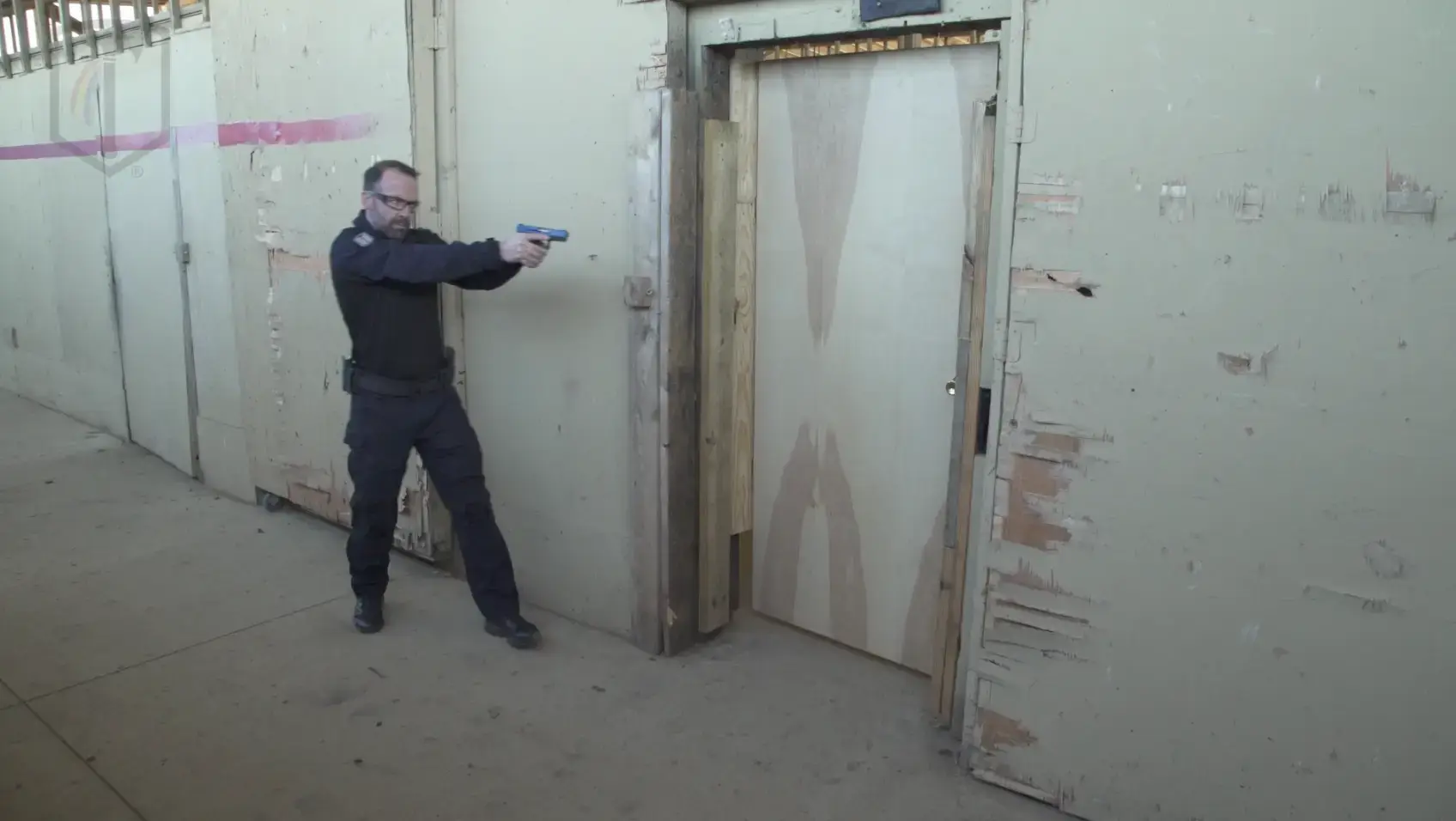
OBJECTIVES
1. Understanding the Weapon Position
- Understand what the low ready position is and recognize its appearance and key features.
2. Utilizing the Low Ready Effectively
- Observe and learn proper technique through video demonstrations for adopting and maintaining the low ready position.
3. When and Why to Use the Low Ready
- Identify appropriate situations for employing the low ready position.
- Learn key points of performance to ensure safety, control, and readiness during firearm handling.
The “Why” Series: High Ready
- Law Enforcement
5 Minutes
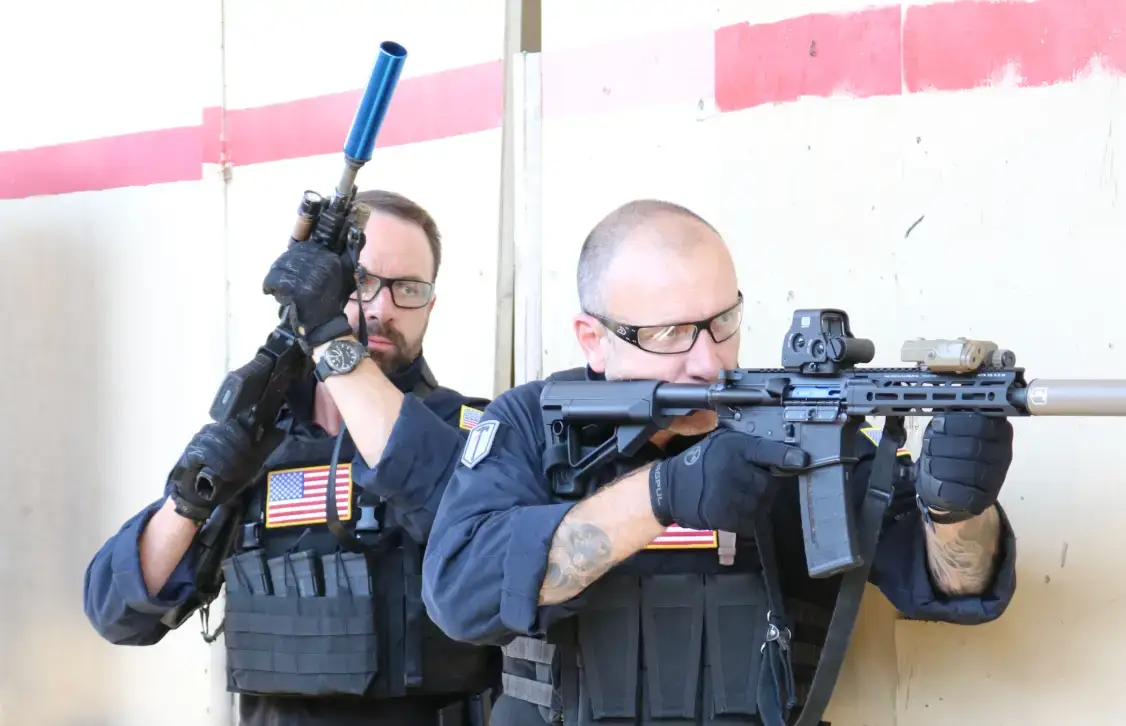
This course equips participants with the knowledge to properly adopt and apply the high ready fighting position to enhance safety, readiness, and tactical advantage in firearm handling.
OBJECTIVES
1. Understanding the Weapon Position
- Comprehend what the high ready fighting position is and recognize its appearance and key characteristics.
2. Utilizing the High Ready Effectively
- Observe and understand proper technique through video demonstrations to adopt and maintain the position correctly.
3. When and Why to Use the High Ready
- Learn appropriate situations and tactical considerations for employing the high ready position.
- Recognize key points of performance to ensure safety, readiness, and effectiveness during engagements.
Law Enforcement Officer Safety Act (LEOSA)
- Law Enforcement
10 Minutes
Overall, the course provides essential knowledge on the Law Enforcement Officer Safety Act (LEOSA), including qualifications, legal considerations, liabilities, and strategies for maintaining safety and legal standing in retirement.
WHAT YOU WILL LEARN
- Understanding LEOSA
- Pertinent Aspects of LEOSA
- HR218, Sections 926B & C
- Criminal vs. Civil Liability
- Maintaining Health & Performance in Retirement
- Legal Representation
OBJECTIVES
1. Understanding LEOSA
- Learn the purpose and key provisions of LEOSA through a video introduction and law overview.
2. Pertinent Aspects of LEOSA
- Identify who qualifies as a law enforcement officer under LEOSA.
- Recognize required identification and the impact of federal overrides.
- Understand exceptions and limitations associated with the law.
3. HR218, Sections 926B & C
- Review guidance and requirements for both current and retired law enforcement officers regarding firearm carry and related activities.
4. Criminal vs. Civil Liability
- Explore the distinctions and considerations for retired officers regarding potential criminal and civil liabilities when exercising LEOSA rights.
5. Maintaining Health & Performance in Retirement
- Understand the physical and mental limitations associated with aging that may affect firearm use and safety.
6. Legal Representation:
- Gain ideas on obtaining and retaining legal counsel to support LEOSA-related rights and responsibilities.
The “Why” Series: Low Ready
- Law Enforcement
5 Minutes
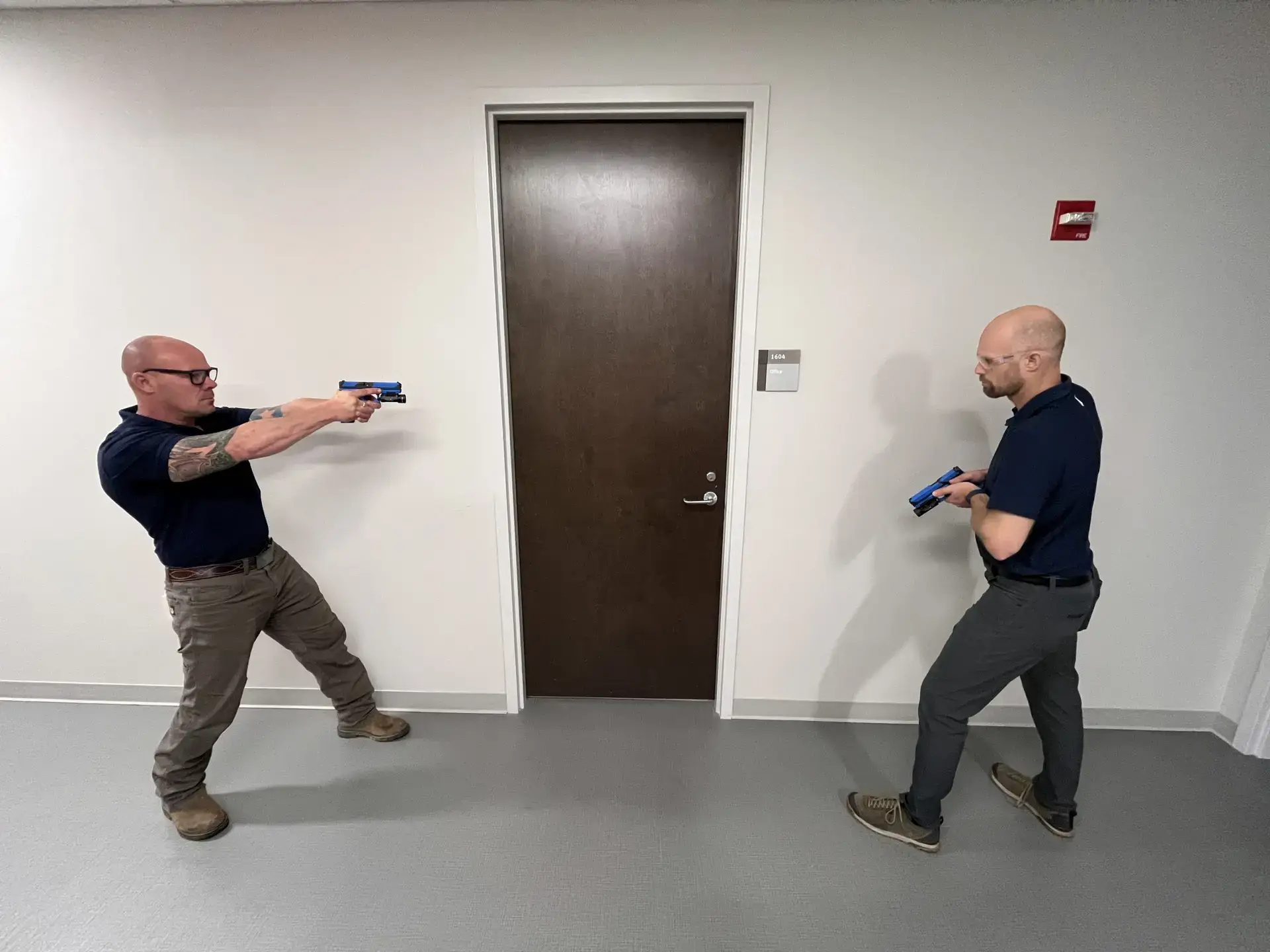
This course equips participants with the foundational knowledge to effectively apply the rule during room entry, optimizing safety, control, and situational awareness.
OBJECTIVES
1. Understanding the Rule
- Comprehend what the “rule” is and recognize its characteristics and visual appearance through photographic examples.
2. When and Why to Apply the Rule
- Understand the operational considerations for using the rule.
- Learn key points of performance to ensure effective and safe movement into a room while managing distance appropriately.
Long Range Precision Shooting
- Law Enforcement
60-180 Minutes
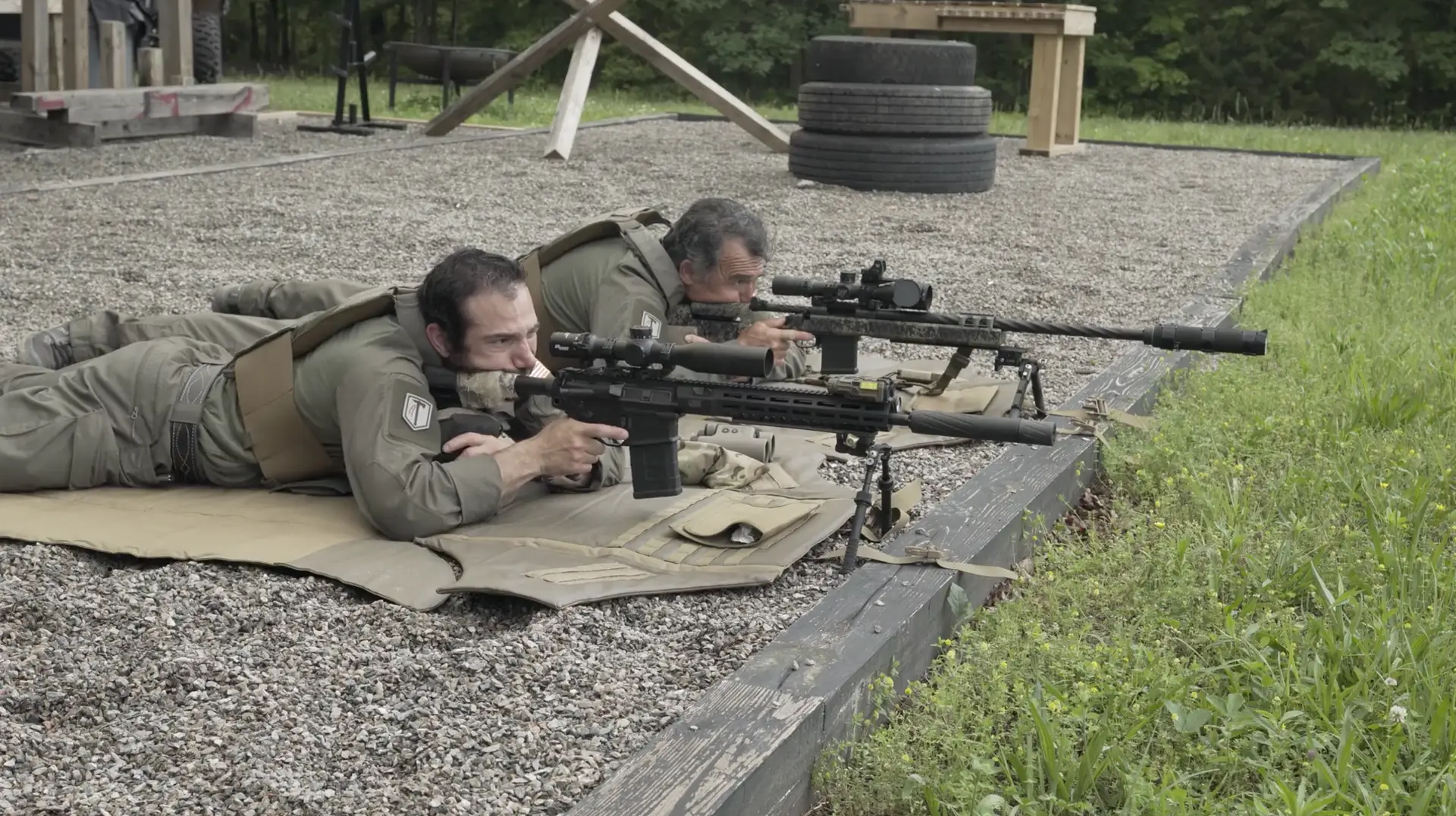
Overall, this course equips law enforcement professionals with comprehensive knowledge and practical skills for effective, safe, and ethical long-range precision shooting in diverse operational contexts.
WHAT YOU WILL LEARN
- Shooter & Spotter Coordination & Communication
- Range Estimation & Range Cards
- Bolt vs. Gas Guns
- MIL & MOA Sighting Systems
- Setting up the Weapon System
- Range Safety
- Constructing a Deliberate, Hasty, Vehicle Hide
- Patrolling (Rural FFP)
- The Tactical Observer
- Ballistic Calculators
- Internal & External Ballistics
- Positional Shooting
- Low Light Optics & Engagements
- Legal Considerations
- Practical Applications
OBJECTIVES
1. Training Necessity
- Recognize the importance of consistent training for effective long-range engagement in law enforcement operations.
2. Fundamentals of Long-Range Shooting
- Master core techniques including body position, grip, sight picture, breathing, trigger control, and follow-through, demonstrated through videos.
3. Shooter and Spotter Coordination
- Understand roles and responsibilities to ensure effective teamwork during long-range engagements.
4. Communication Techniques
- Develop effective communication strategies and sample dialogue between shooter and spotter for operational success.
5. Range Estimation & Range Cards
- Learn various methods and techniques for accurate range estimation.
- Understand how to develop and properly label range cards for quick reference.
6. Reticle Systems (MIL & MOA)
- Comprehend the use and application of milliradian (MIL) and minute of angle (MOA) reticles in precision shooting.
7. Weapon System Setup
- Follow demonstrated procedures for setting up a weapon system on a semi-automatic platform.
8. Constructing Sniper Hides
- Acquire skills to build deliberate, hasty, and vehicle hides in urban and rural environments, including communication protocols.
9. Patrolling & Engagement
- Observe techniques for approaching concealed positions, estimating range, and engaging targets during patrols.
10. Operational Considerations
- Review tactical concerns specific to law enforcement, integrating long-range sniper tactics into operational planning.
11. Tactical Observation & Communication
- Understand the structure and roles of the tactical observer, including communication strategies.
12. Ballistics
- Gain an understanding of external and internal ballistics, including bullet properties, environmental effects, and the use of ballistic calculators.
13. Shooting Positions & Practical Application
- Practice non-standard shooting positions with demonstration videos.
- Address real-world considerations and problem-solving scenarios for long-range shots.
14. Platform Selection & Range Safety
- Consider key factors when choosing between bolt-action and gas gun platforms.
- Review safety protocols for flat range training.
15. Legal & Ethical Considerations
- Understand relevant case law and ethical considerations for law enforcement long-range engagements.
POTR Methodical Clearance®
- Law Enforcement
120-240 Minutes
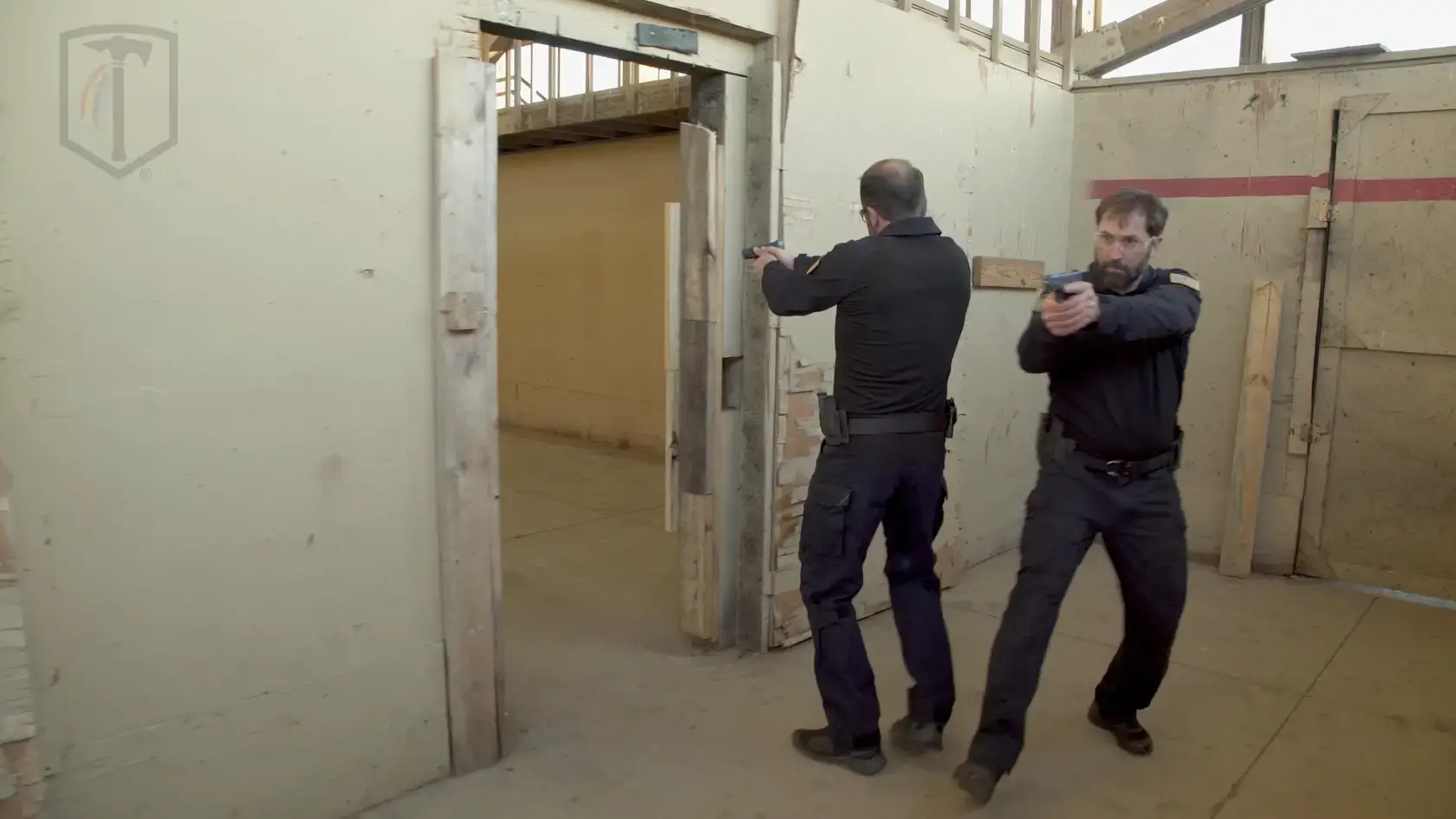
Overall, the course aims to equip learners with foundational and specific tactical knowledge, emphasizing effective communication, threat management, room clearing, and dynamic movement through a combination of theoretical principles and practical demonstrations.
WHAT YOU WILL LEARN
- Interior Tactics 1- and 2-Officer
- Priorities & Principles
- Actions at the Door
- Actions Inside the Room
- Corner- & Center-Fed Barricades
- Dynamic Movement
OBJECTIVES
1. Introduction and Rationale
- Understand the purpose and importance of curriculum development and tactical training.
- Comprehend the evolution of tactics, lessons learned, and throttle control in tactical operations.
2. Course References and Communication
- Acquaint yourself with visual aids such as room layouts, door types, and movement patterns.
- Recognize and apply non-verbal communication and verbal commands effectively.
3. Methodology and Historical Context
- Understand the methodology behind tactical training and its historical evolution, particularly in special operations, transformation, and application.
4. Threat Prioritization and Use of Force
- Learn to prioritize threats based on life, activity, and situational factors.
- Review principles and proper application of use of force (UOF).
5. Tactical Concepts and Techniques
- Understand the Pie concept, correct and incorrect application, and sight over bore techniques.
- Master the OODA Loop for decision-making.
- Analyze various door configurations and approaches through video demonstrations.
6. Room Entry and Clearing Procedures
- Follow written points of performance and visual demonstrations for center-fed and corner-fed room types.
- Practice proper penetration, sweeps, communication, and movement techniques.
- Employ simple verbal commands, cross-pan principles, and switch techniques.
7. Search and Movement Strategies
- Conduct single and dual point search methods, move-to-contact scenarios, and crossing thresholds.
- Exit rooms safely, patch to the spine, and execute hasty pie strategies.
- Appreciate the importance of dynamic movement against opposing threats, including buttonhook techniques, supported by video demonstrations.
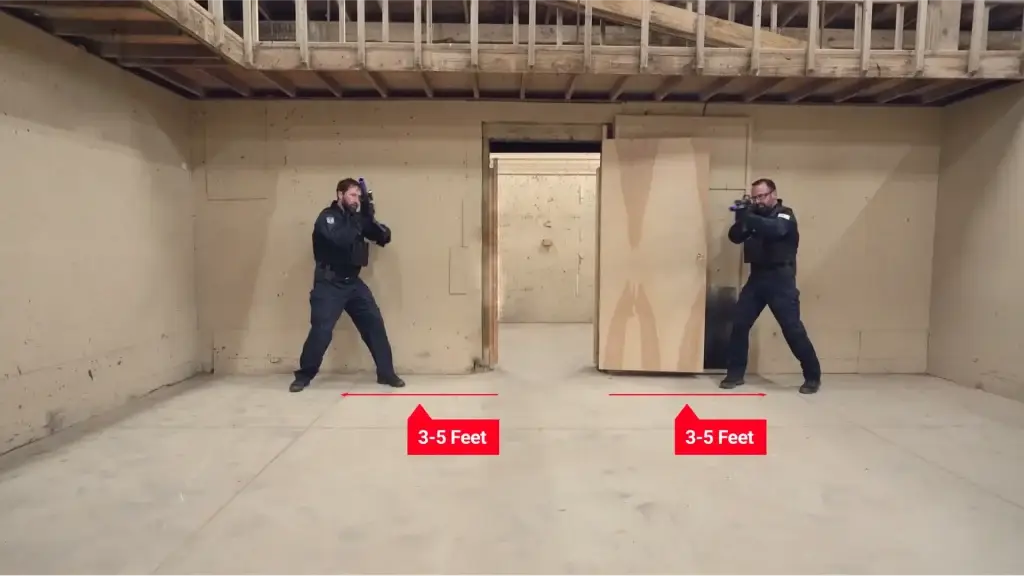
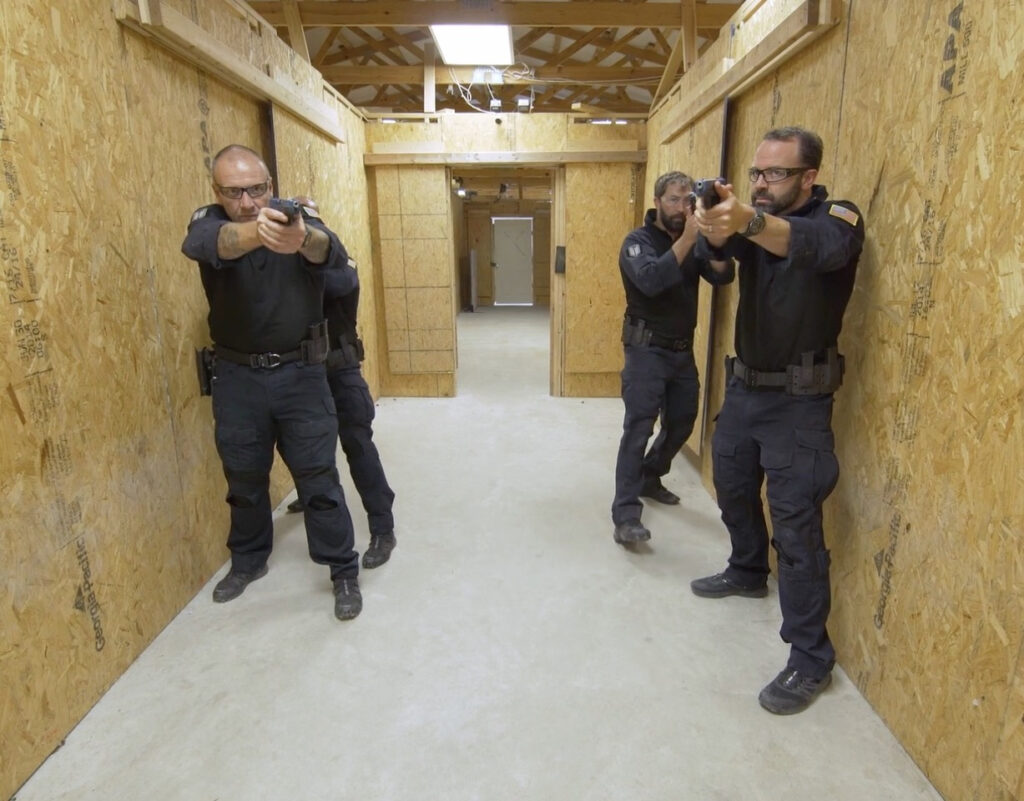
The “Why” Series: 3′-5′ Rule for Entering Spaces
- Law Enforcement
5 Minutes
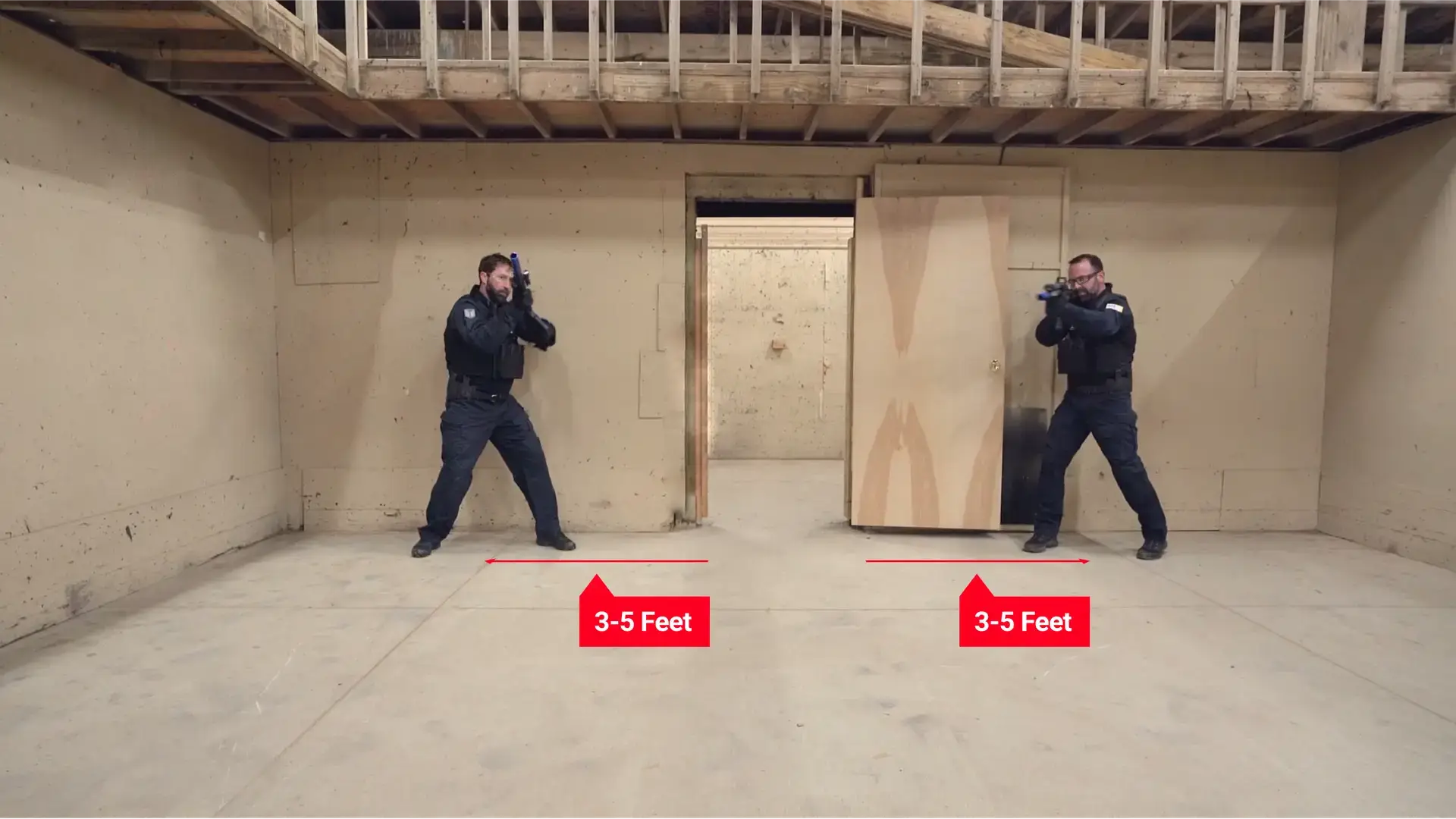
This course provides foundational knowledge for conducting safe, coordinated, and effective tactical entries into rooms, emphasizing team positioning and risk mitigation.
OBJECTIVES
1. Understanding the Tactical Entry Rule
- Comprehend the principles of 2- and 4-officer spacing, including maintaining proper distance between team members.
- Recognize the importance of the primary sweep and threat coverage for effective room entry.
- Understand the significance of team coordination during tactical entries to ensure safety and operational success.
2. Preventing Overpenetration
- Learn to identify the risks associated with overpenetration during initial entry through schematic representations.
- Apply strategies to minimize overpenetration, safeguarding team members and occupants.
SWAT Methodical Clearance®
- Law Enforcement
120-240 Minutes
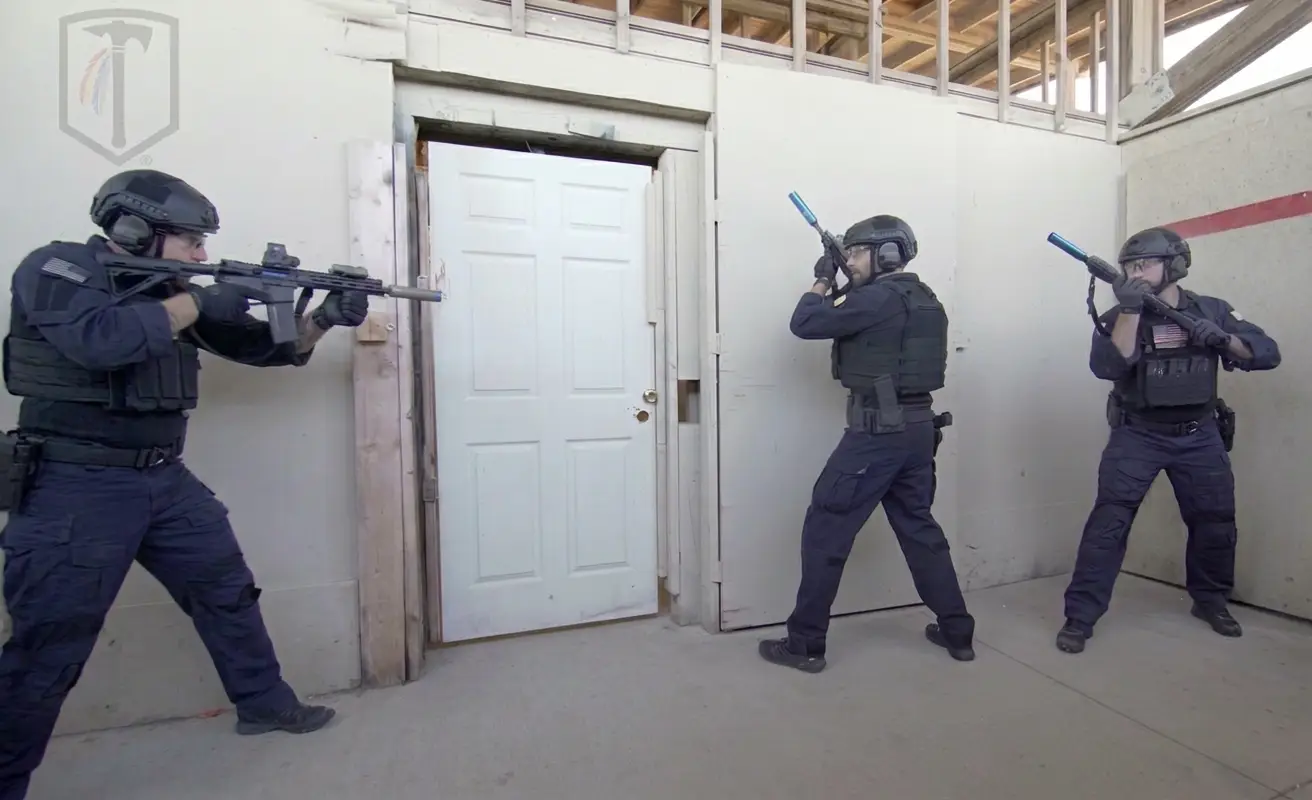
Overall, the course aims to equip learners with foundational and specific tactical knowledge, emphasizing effective communication, threat management, room clearing, and dynamic movement through a combination of theoretical principles and practical demonstrations.
WHAT YOU WILL LEARN
- Interior Tactics 1- and 2-Officer
- Priorities & Principles
- Actions at the Door
- Actions Inside the Room
- Corner- & Center-Fed Barricades
- Dynamic Movement
OBJECTIVES
1. Introduction and Rationale
- Understand the purpose and importance of curriculum development and tactical training.
- Comprehend the evolution of tactics, lessons learned, and throttle control in tactical operations.
2. Course References and Communication
- Acquaint yourself with visual aids such as room layouts, door types, and movement patterns.
- Recognize and apply non-verbal communication and verbal commands effectively.
3. Methodology and Historical Context
- Understand the methodology behind tactical training and its historical evolution, particularly in special operations, transformation, and application.
4. Threat Prioritization and Use of Force
- Learn to prioritize threats based on life, activity, and situational factors.
- Review principles and proper application of use of force (UOF).
5. Tactical Concepts and Techniques
- Understand the Pie concept, correct and incorrect application, and sight over bore techniques.
- Master the OODA Loop for decision-making.
- Analyze various door configurations and approaches through video demonstrations.
6. Room Entry and Clearing Procedures
- Follow written points of performance and visual demos for center-fed and corner-fed room types.
- Practice proper penetration, sweeps, communication, and movement techniques.
- Employ simple verbal commands, cross-pan principles, and switch techniques.
7. Search and Movement Strategies
- Conduct single and dual point search methods, move-to-contact scenarios, and crossing thresholds.
- Exit rooms safely, patch to the spine, and execute hasty pie strategies.
- Appreciate the importance of dynamic movement against opposing threats, including buttonhook techniques, supported by video demonstrations.
Range Health Hazards
- Law Enforcement
2 Minutes

This course promotes awareness of health risks related to shooting activities and emphasizes prevention techniques to protect law enforcement personnel’s health during range operations.
OBJECTIVES
1. Understanding Lead Exposure
- Recognize the sources of lead exposure commonly encountered at shooting ranges.
2. Health Effects of Lead Exposure
- Understand the potential health risks and symptoms associated with lead poisoning and long-term exposure.
3. Prevention Strategies
- Learn effective methods to prevent lead exposure, including proper hygiene, equipment handling, and range safety practices.
4. Timing and Symptoms
- Identify when lead exposure is most likely to occur and recognize the signs and symptoms of lead poisoning.
Rescue Task Force
- Law Enforcement
20 Minutes
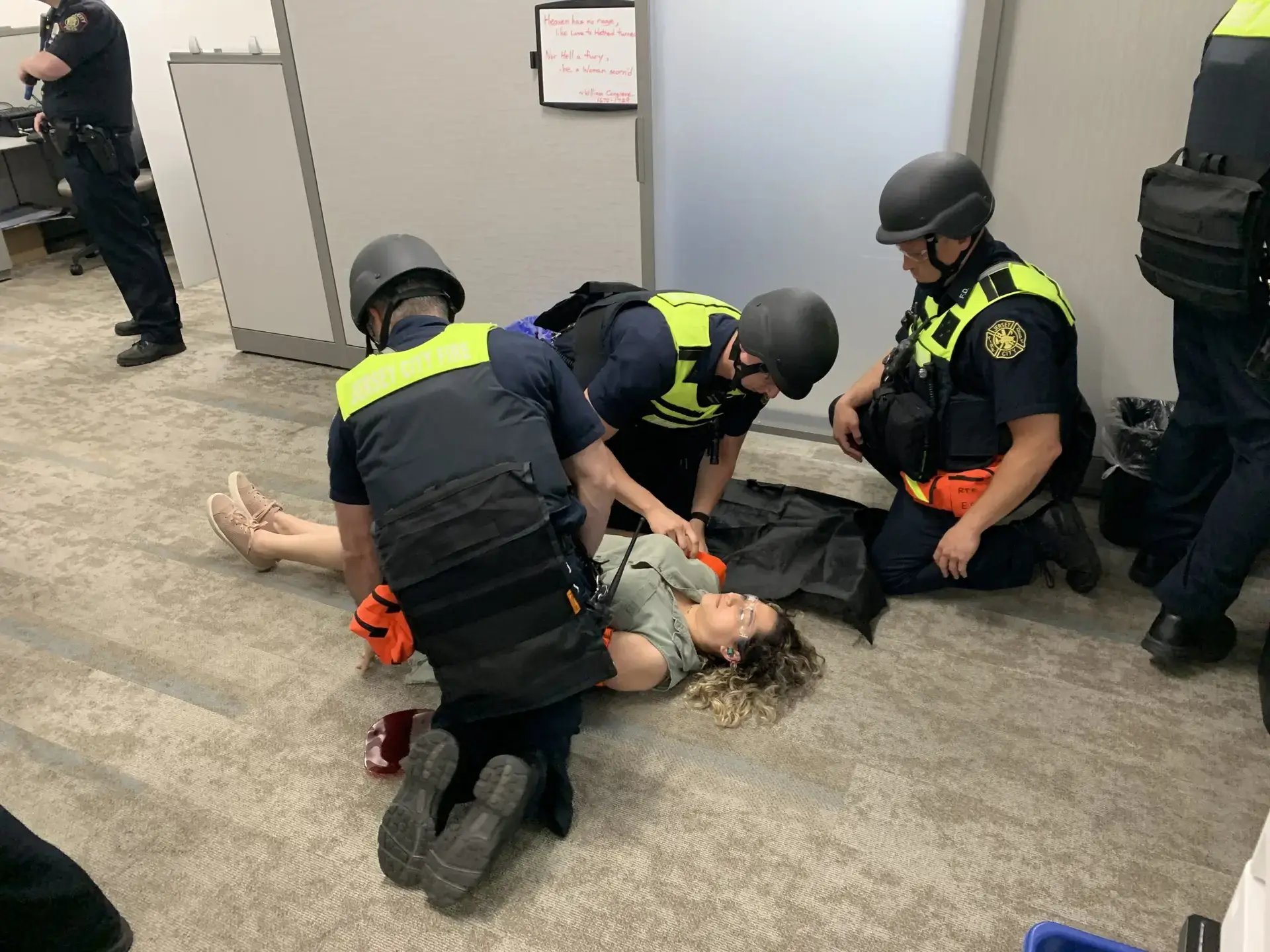
Overall, the course provides a comprehensive understanding of Rescue Task Force models, including planning, equipment, operational strategies, and key incident analyses, to enhance coordinated response capabilities in active threat situations.
WHAT YOU WILL LEARN
- Understanding the RTF Model
- Essential Equipment
- Deployment Plans, Emergency Actions & Contingencies
- Notable RTF Models
- Analysis of Active Threat Events
OBJECTIVES
1. Understanding the RTF Model
- Learn the origins and core principles behind the RTF concept.
- Gain an overview of law enforcement (LE), emergency management (EM), and fire service roles.
- Understand how operational zones are defined within the RTF framework.
2. Essential Equipment
- Identify necessary personal protective equipment (PPE), communication devices, and tactical gear.
- Learn how to maintain, store, and integrate gear effectively.
- Recognize the basic medical equipment required for RTF deployments.
3. Deployment Planning and Contingencies
- Develop essential plans for RTF activation, including sample deployment scenarios.
- Understand key safety principles and strategies to ensure team and scene safety.
- Review sample deployment plans and Emergency Action Plans (EAPs) specific to RTF operations.
- Incorporate contingency planning to adapt to evolving situations.
4. Notable RTF Models
- Examine case studies from Arlington, VA, and explore global applications of RTF models.
5. Medical Response Analysis
- Analyze responses from incidents such as Stoneman Douglas High School, Century 16 Theater, and Pulse Night Club.
- Understand challenges related to scene security, deployment logistics, and law enforcement acting as medical responders.
- Recognize obstacles faced by EMS agencies and extract key lessons learned from Tomahawk’s specialized incident response drills.
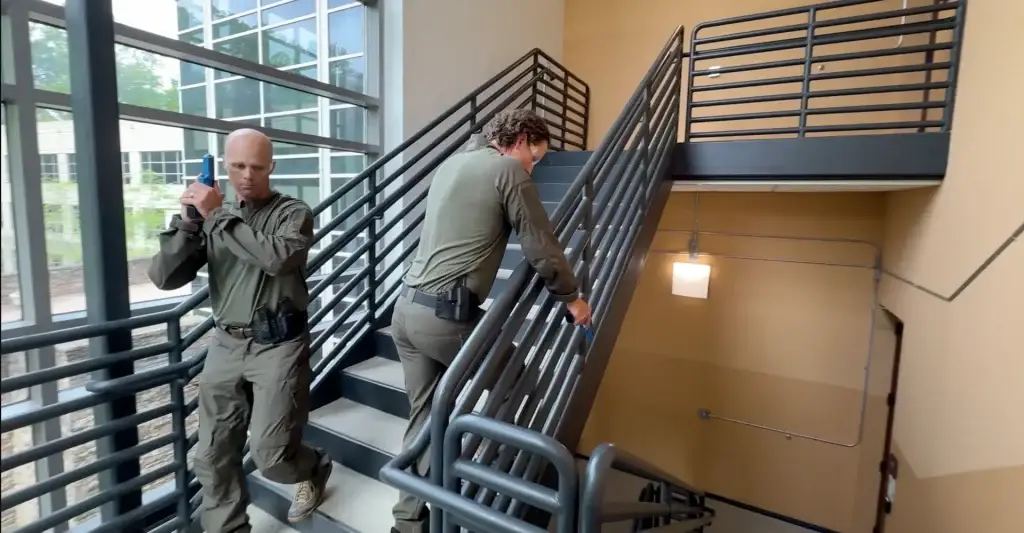
Stairways
- Law Enforcement
30 Minutes
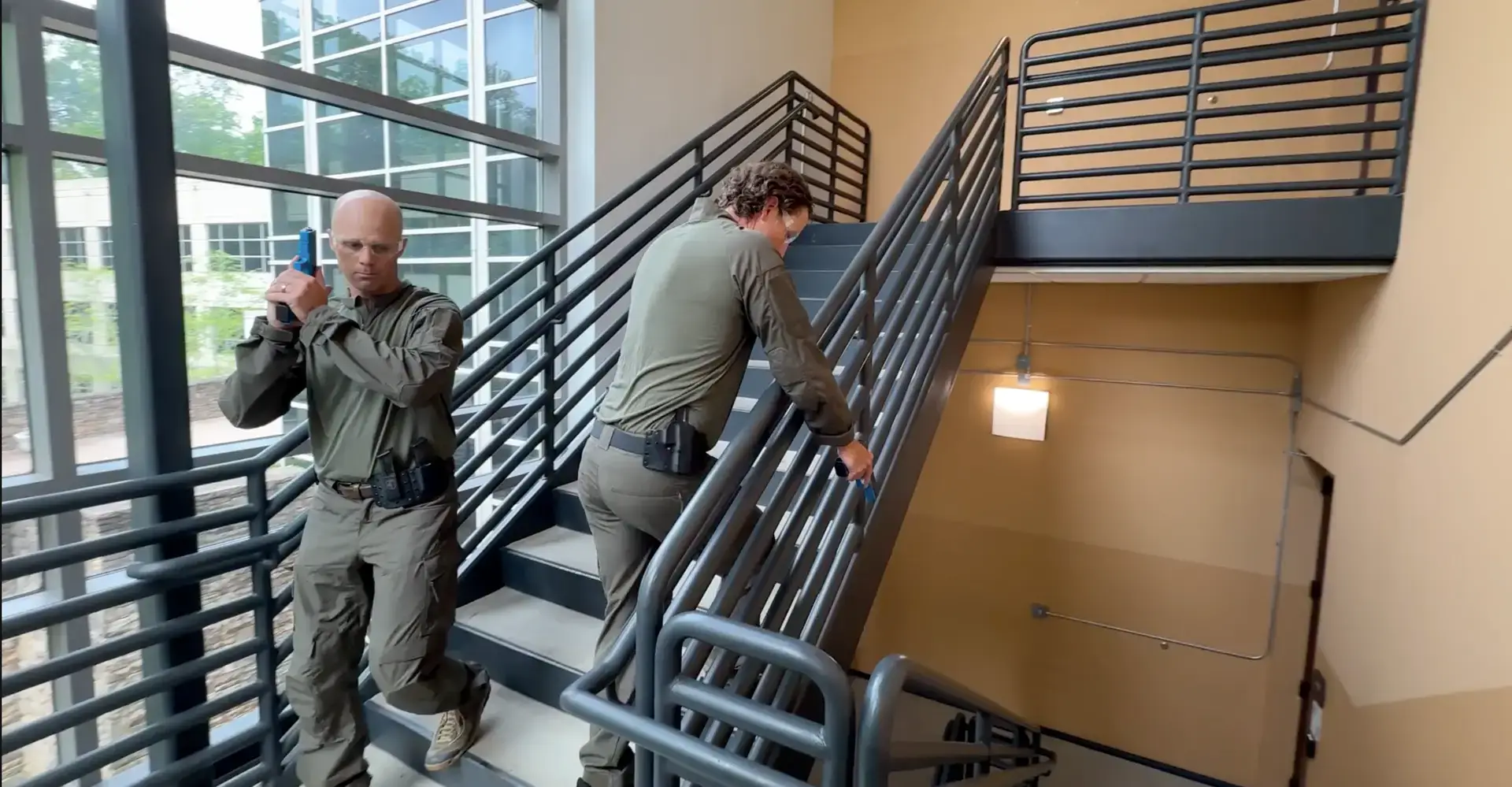
Overall, the course aims to enhance understanding of tactical navigation through stairways using visual aids, practical demonstrations, and team movement strategies, enabling safer and more effective stairway clearance operations.
WHAT YOU WILL LEARN
- Navigating Stairways
- Entering & Exiting Stairways
- Moving Down
- Moving Up
OBJECTIVES
1. Fundamental Concepts and Terminology
- Understand key definitions, terms, and diagrams related to stairway navigation.
- Familiarize with visual representations and core concepts of stairway operations.
2. Practical Demonstrations
- Observe video exemplars showcasing proper stairway training techniques.
- Analyze demonstrations of personnel executing stairway clearance procedures.
3. Team Movements and Tactics
- Learn and practice three-officer execution of tactical movements into and out of a stairway.
- Understand coordination and communication strategies during stairway entries and exits.
4. Multi-Operator Maneuvers
- Review and comprehend techniques for 2 to 4 officers moving upward and downward within stairways.
- Emphasize the importance of team synchronization, safety, and effective movement in confined spaces.
School Resource Officer (SRO)
- Law Enforcement
15 Minutes
Overall, this course equips individuals with the knowledge to identify risks, respond effectively to threats, and implement practical security measures to protect residential property and occupants.
A POTR supplement
WHAT YOU WILL LEARN
- Philosophy
- Considerations
- Equipment: Concerns & Considerations
- Communications: Concerns & Considerations
- Training: Concerns & Considerations
- Tactical Elements
OBJECTIVES
1. Understanding School Construction Concerns
- Recognize key considerations related to school building design and layout that impact safety and response strategies.
2. Philosophy and Crime Trends
- Learn statistical insights and current trends, including the “Run, Hide, Fight” approach.
- Understand the evolving nature of school shooting incidents and proactive response principles.
3. Building Relationships and Community Engagement
- Develop strategies for understanding and establishing positive relationships with students, staff, and the school community.
4. Equipment Considerations
- Differentiate between ideal vs. practical equipment needs.
- Consider storage, accessibility, and security of protective gear and tools.
5. Communication Strategies
- Identify effective communication methods and appropriate channels during an incident.
- Learn about the PACE (Primary, Alternate, Contingency, Emergency) communication algorithm and supplementary technology options.
6. Training Focus
- Maximize limited training time by reinforcing fundamental skills and tactics.
- Prioritize ongoing skill development and scenario-based training.
7. Tactical Response Elements
- Understand critical tactical actions such as arrival procedures, communication protocols, deployment tactics, and team link-up strategies.
Glock (Manufacturer) Pistol Lubrication
- Law Enforcement
2 Minutes
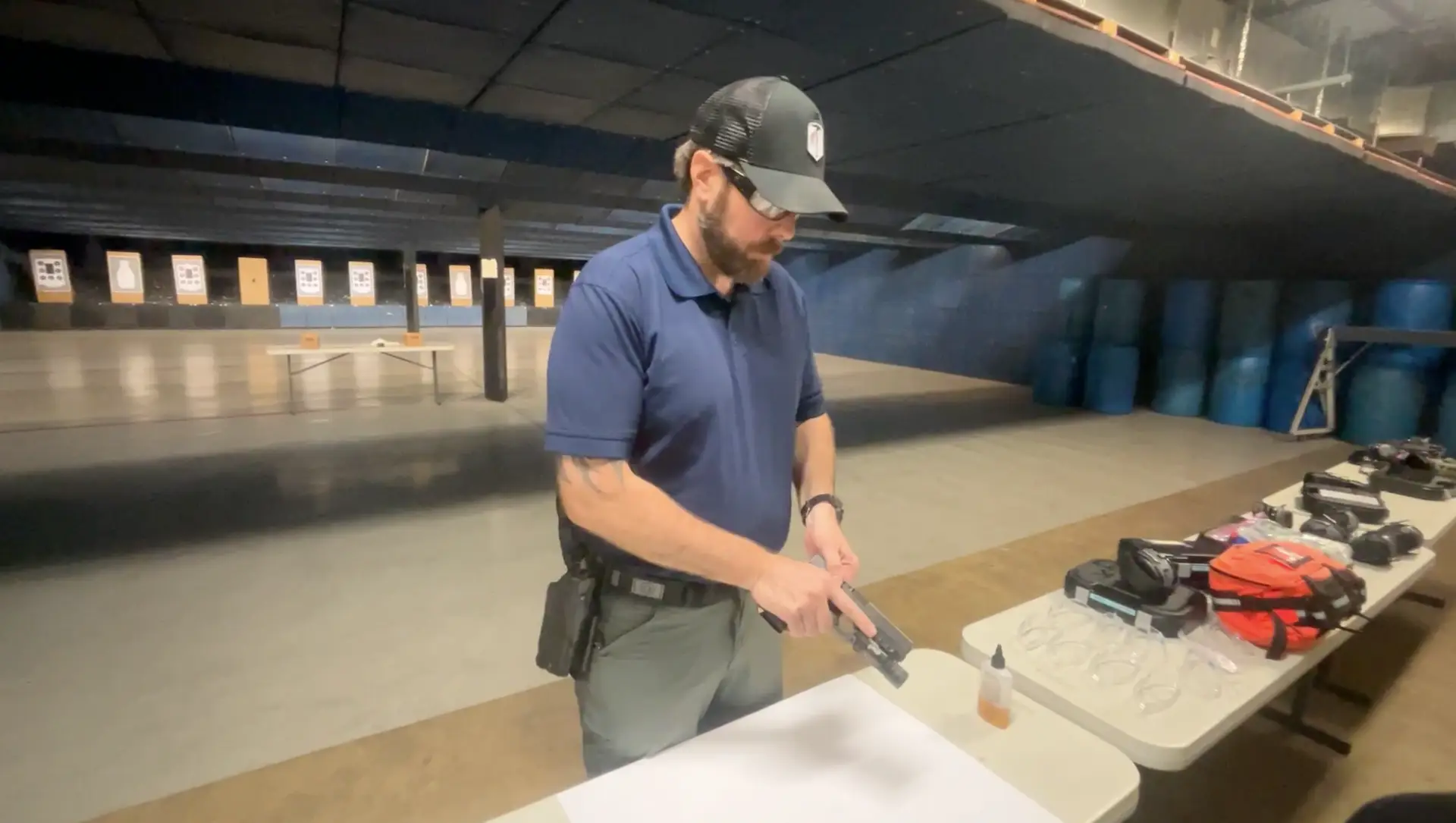
OBJECTIVES
1. Understand the essential lubrication points on a Glock semi-automatic pistol.
2. Recognize the areas that require lubrication to ensure smooth operation and reliability.
3. Learn proper techniques for applying lubricant to maintain firearm function.
4. View a detailed video demonstration to reinforce correct lubrication procedures.

- Our online training may qualify for CEU/CME credits to satisfy training requirements
- Improve your team’s safety and readiness for an emergency
- Access a wide range of topics, all available on-demand for your officers
Partner with Tomahawk
Relevant, realistic, relatable content
Access short and effective training courses like:
- Methodical Clearance®
- Hostage Rescue – Dynamic Clearance
- Patrol Officer Tactical Response: Active Threat
- …and an extensive media library.
Clips
Law Enforcement
10 Jun 2026
Stairways
Law Enforcement
10 Jun 2026
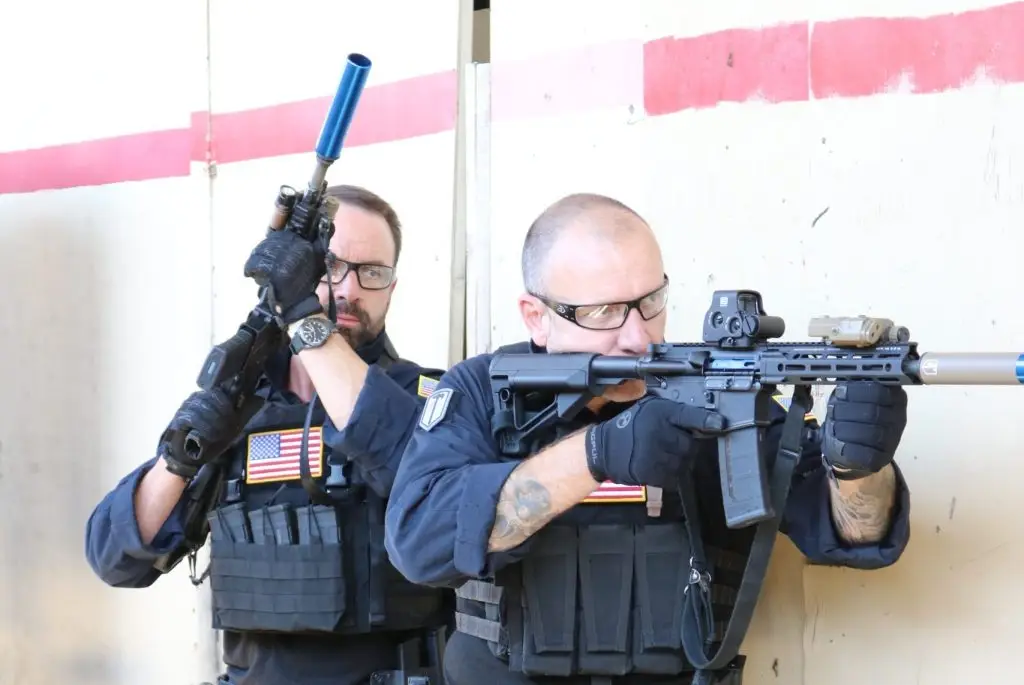
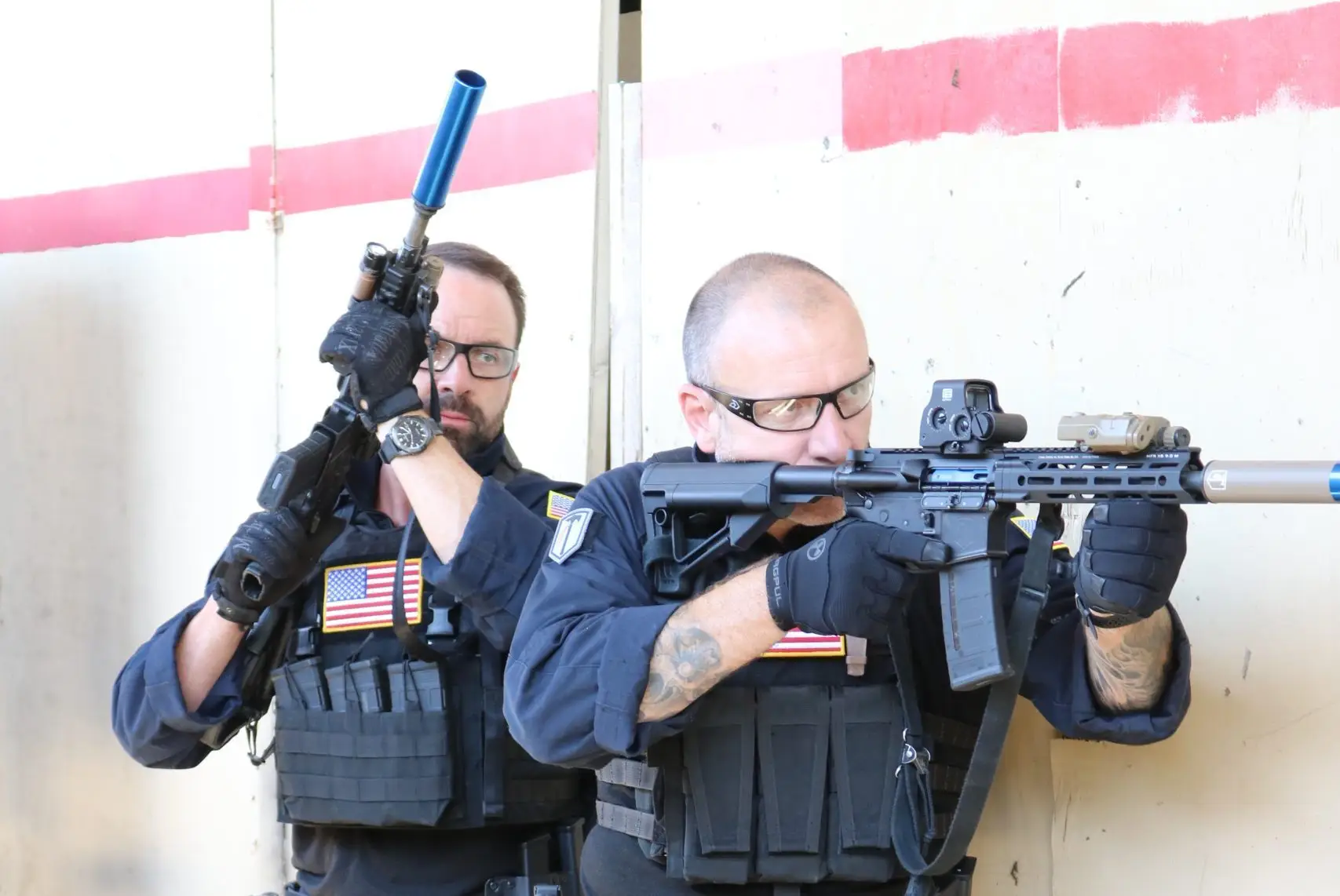
The High Ready
Law Enforcement
10 Jun 2026
3-5 Foot Rule
Law Enforcement
4 May 2024
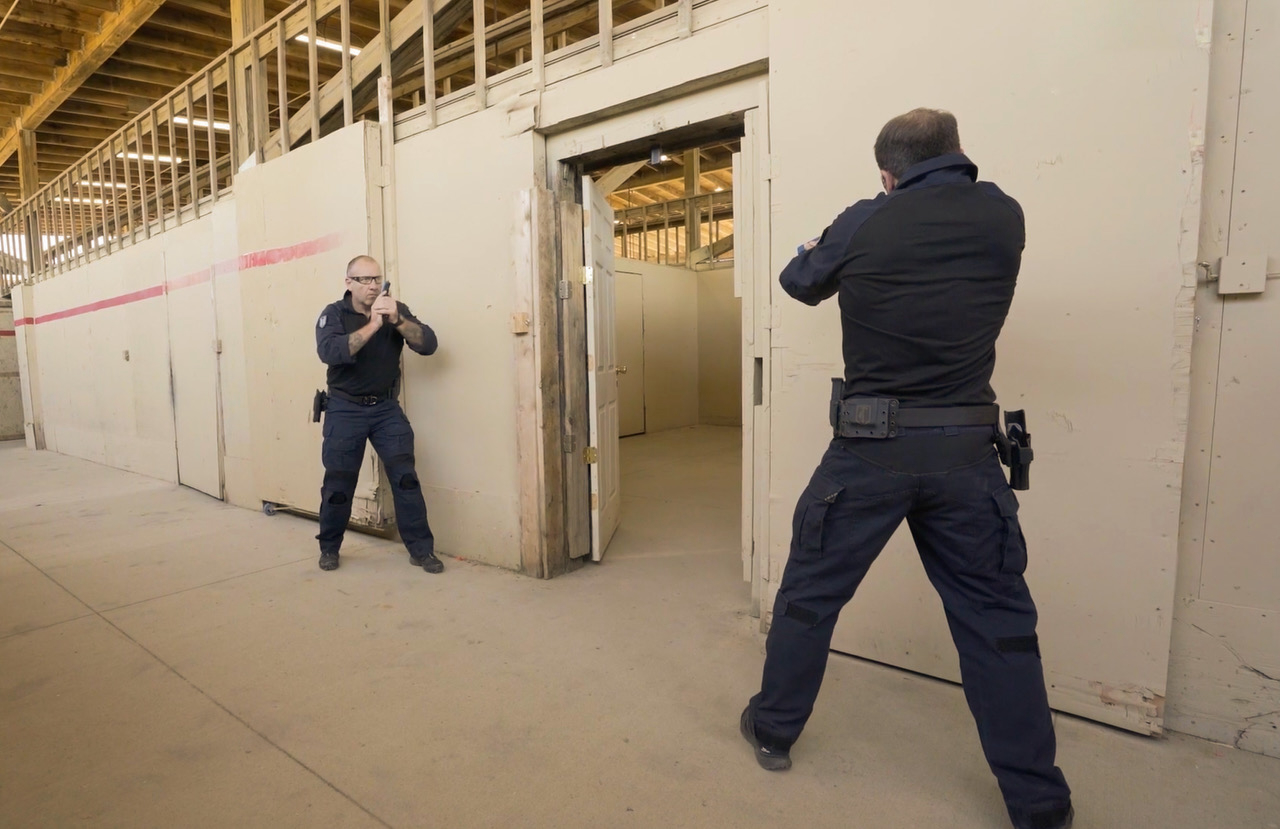
4-Officer Hallway Movement (Animation)
Law Enforcement
4 May 2024
2-Officer Split-Door Breach
Unparalleled experience
-
“The e-learning portion of the training allowed us to more quickly grasp the concepts we were introduced to. I think this was important for us being able to get the most out of the training.”
Law enforcement partner

-
“Our tactical team trains with Tomahawk in person, so we know how excellent their online courses are for our teams to stay up to date and reference common tactics. Also, the online courses are great for on-boarding new team members so they can hit the ground running with live training.”
Law enforcement partner

 English
  Danish